Healthy trees begin with healthy soil. On Long Island, where sandy soils dominate the South Shore and richer loams can be found on the North Shore, understanding soil composition and fertility is key to nurturing robust trees. Soil provides the nutrients, moisture, and support that trees need to thrive, and its health directly impacts the longevity and vitality of your landscape. Fertilization plays a role in replenishing nutrients that may be lacking or depleted, but indiscriminate application of fertilizers can do more harm than good. By focusing on soil health, conducting soil tests, and tailoring fertilization practices to the specific needs of your trees, you can promote strong growth without compromising environmental integrity. Working with our team of certified arborists ensures that your trees receive the right nutrients at the right time, helping them resist pests and diseases and withstand the challenges of weather and stress.
Soil is a complex mixture of minerals, organic matter, water, and air. The relative proportions of sand, silt, and clay determine the texture and drainage characteristics of the soil. Sandy soils drain quickly but may not retain nutrients well, while clay soils hold water but can become compacted and poorly aerated. Loamy soils, with a balanced mix of particle sizes, are ideal for most plants. In addition to texture, soil pH influences nutrient availability. Most trees prefer slightly acidic to neutral soil, but some, such as oaks and hollies, thrive in more acidic conditions. A soil test provides information about pH, nutrient levels, and organic matter content. Based on this analysis, our team can determine which nutrients are lacking and whether amendments are needed to adjust pH or improve structure.
Trees require macro nutrients such as nitrogen, phosphorus, and potassium for growth, root development, and overall health. Nitrogen promotes leaf and shoot growth, phosphorus supports root and flower development, and potassium enhances stressor resistance and water regulation. Micro nutrients like iron, manganese, zinc, and copper are needed in smaller amounts but are essential for enzyme function and chlorophyll production. Deficiencies in these nutrients manifest as symptoms such as chlorosis, stunted growth, or reduced flowering. However, excess nutrients can be just as detrimental, leading to weak growth, increased susceptibility to disease, and nutrient runoff that pollutes waterways. A targeted fertilization program determined by our experienced team of certified arborists ensures that nutrients are supplied at appropriate levels.
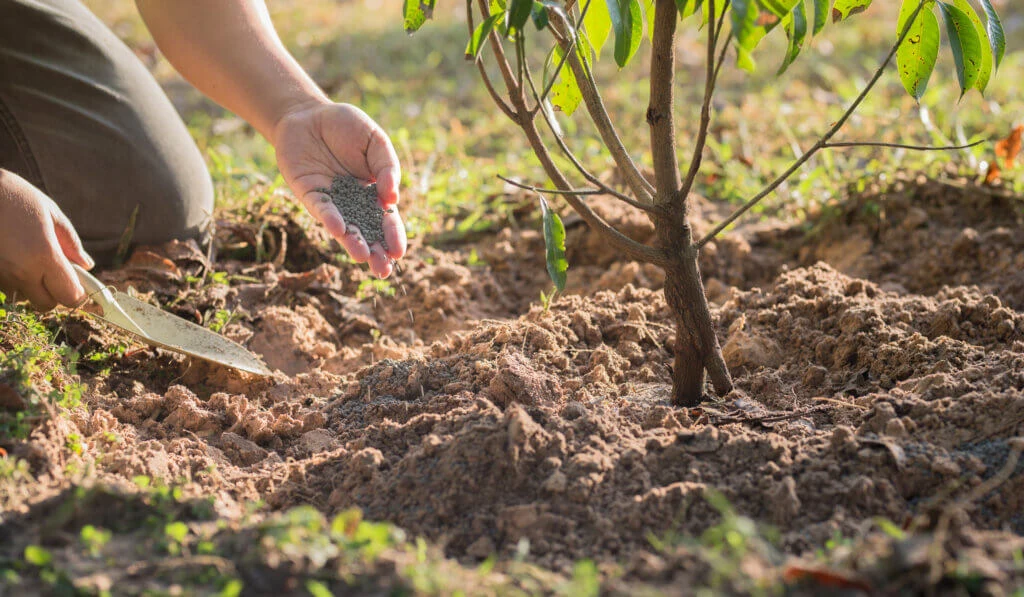
Fertilizers come in organic and synthetic forms. Organic fertilizers, such as compost, manure, and bone meal, release nutrients slowly as they break down, improving soil structure and microbial activity. Synthetic fertilizers provide readily available nutrients but can leach away quickly if not properly applied. For established trees, deep root fertilization is an effective technique. This involves injecting a liquid fertilizer solution into the soil at the root zone, usually twelve to eighteen inches deep. This method bypasses the surface layer, delivering nutrients directly where the roots can absorb them. Timing is crucial; fertilization is typically done in early spring or late fall when roots are actively growing. Applying fertilizer at the wrong time can encourage tender growth that is susceptible to frost or insects.
In addition to fertilization, improving soil health through cultural practices enhances tree longevity. Applying a layer of organic mulch around the base of the tree conserves moisture, suppresses weeds, and moderates soil temperature. Mulch should be kept a few inches away from the trunk to prevent decay. Aerating compacted soil allows air and water to reach the roots. This can be done through vertical mulching or radial trenching performed by our team of certified arborists. Incorporating compost or well‑decomposed organic matter into the soil increases its capacity to hold nutrients and water. Maintaining proper moisture levels through consistent watering during dry spells supports nutrient uptake. Protecting the root zone from construction activities, foot traffic, and heavy equipment prevents compaction and root damage.
Fertilization is a valuable tool, but it is only effective when combined with an understanding of soil health and tree biology. By conducting soil tests, selecting appropriate fertilizers, and adopting practices that enhance soil structure, you create a strong foundation for tree longevity. If you are unsure about your soil’s needs or how to apply fertilizer safely, consult us at Organically Green. They can interpret soil test results and design a fertilization schedule tailored to your property. With proper care, the trees on your Long Island property will remain healthy and resilient, providing shade, beauty, and ecological benefits for many years to come.